

Choisir la bonne décoration murale peut transformer totalement l’atmosphère d’une maison. Les matériaux sont aussi impor...
Decorating a small home can feel challenging, especially when you want your space to reflect both style and meaning. The good news is that Islamic Muslim art works beautifully in compact interiors when chosen thoughtfully. Instead of overcrowding your walls, the right artwork creates calm, balance, and visual depth.
Today, many apartments and modern homes use Islamic wall art to bring identity into limited spaces. From elegant islamic calligraphy art to minimalist geometric designs and soft islamic paintings, Wafanoor helps homeowners decorate small areas without sacrificing beauty. In this guide, you’ll learn how to choose the best Islamic artwork for small spaces.
Islamic artwork relies on balance, repetition, and clarity rather than heavy imagery. Geometric forms, arabesque art, and calligraphy create structure without visual chaos, making rooms feel open instead of crowded.
In small rooms, every design choice matters. A carefully placed piece of Islamic Muslim art becomes a focal point, guiding the eye and making the space feel intentional rather than busy.
Wafanoor blends tradition with modern minimalism. Each piece of islamic decorative art is curated to feel light, elegant, and suitable for apartments, studios, and cozy living areas.
Oversized art can overwhelm small rooms, while tiny pieces disappear on the wall. The goal is proportion. Your islamic wall art should fill space without dominating it.
Before buying, tape paper templates on your wall to preview how your Islamic artwork will look in real size.
Dark, heavy colors absorb light and make rooms feel smaller. Light tones reflect light and open the room visually.
Neutral palettes work best for compact interiors:
These shades make islamic paintings and calligraphy feel calm instead of heavy.
Choose designs with breathing room. Minimalist islamic calligraphy art and soft geometric backgrounds prevent visual clutter.
Vertical art is taller than wide. It pulls the eye upward and makes ceilings appear higher.
Compact spaces benefit from height illusion. Tall islamic wall art visually stretches the room.
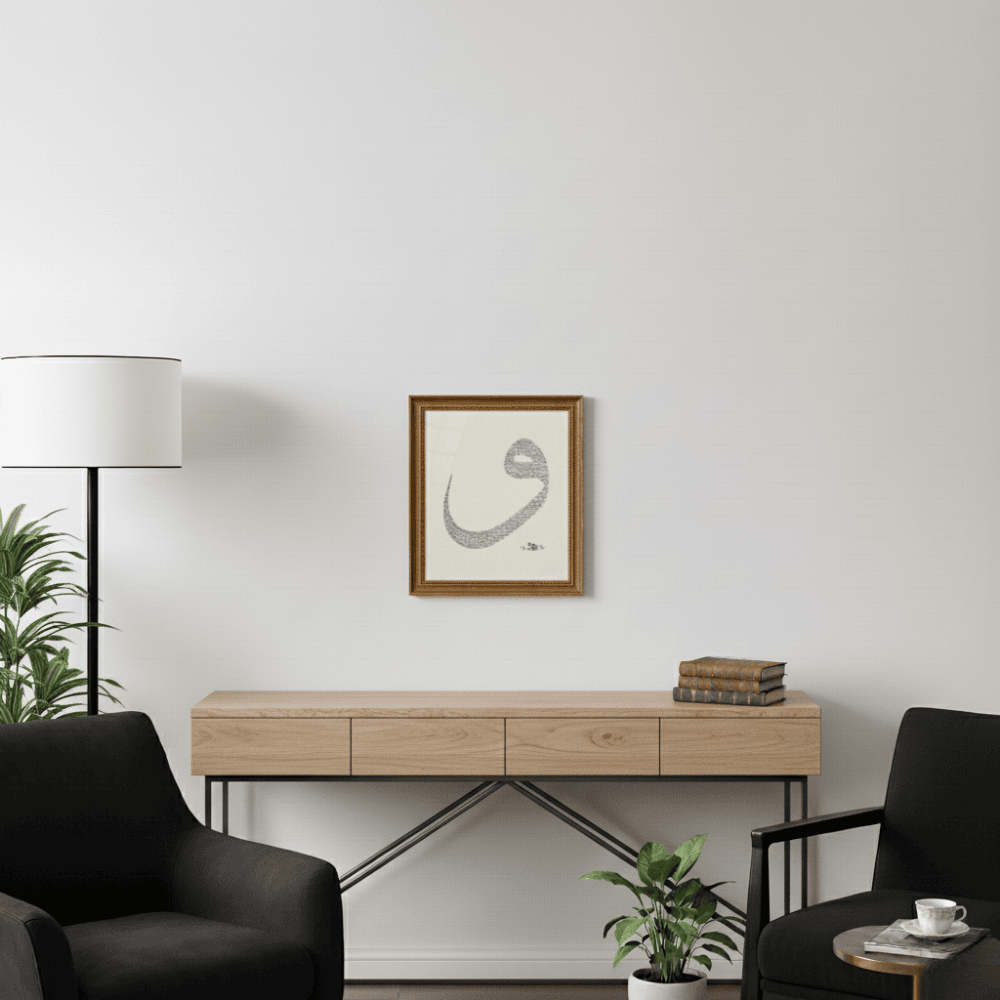
These formats help small homes feel larger and more balanced.
Islamic calligraphy art delivers meaning without busy visuals. A single phrase or verse becomes both decorative and spiritual.
Choose clean scripts, clear spacing, and simple backgrounds. Avoid overly dense compositions.
Small calligraphy pieces work beautifully in:
They add personality without overwhelming the space.
In large homes, you can mix many styles. In small spaces, too much variety causes visual noise.
You can safely combine:
Instead of large galleries, use 2–3 coordinated islamic artwork frames with matching colors and spacing.
Small spaces look better with fewer but richer elements. Instead of many frames, choose one textured piece.
Texture adds depth without needing extra decoration.
Place textured islamic wall art where light can touch it, creating gentle shadows and dimension.
Pros:
Cons:
Pros:
Cons:
Understanding this helps you choose Islamic Muslim art that fits your environment instead of fighting it.
These mistakes make rooms feel crowded and smaller than they really are.
Limit yourself to one main islamic wall art piece per wall and build space around it.
Wafanoor curates Islamic Muslim art specifically for modern lifestyles. Instead of bulky traditional designs, Wafanoor focuses on balanced layouts, light palettes, and premium materials that work well in compact homes.
From minimalist islamic calligraphy art to modern muslim painting art and elegant islamic geometric art, Wafanoor helps small spaces feel intentional, stylish, and meaningful.
This approach makes Wafanoor ideal for apartments, studios, and cozy family homes.
Share:
Choisir la bonne décoration murale peut transformer totalement l’atmosphère d’une maison. Les matériaux sont aussi impor...

La décoration murale ne se limite plus aux cadres et tableaux classiques. Aujourd’hui, les propriétaires recherchent des...

La décoration murale joue un rôle essentiel dans l’atmosphère d’un intérieur. Au lieu de se limiter à la peinture et au...

Les designs intérieurs modernes ne reposent plus uniquement sur le mobilier et les couleurs des murs. Aujourd’hui, les m...