
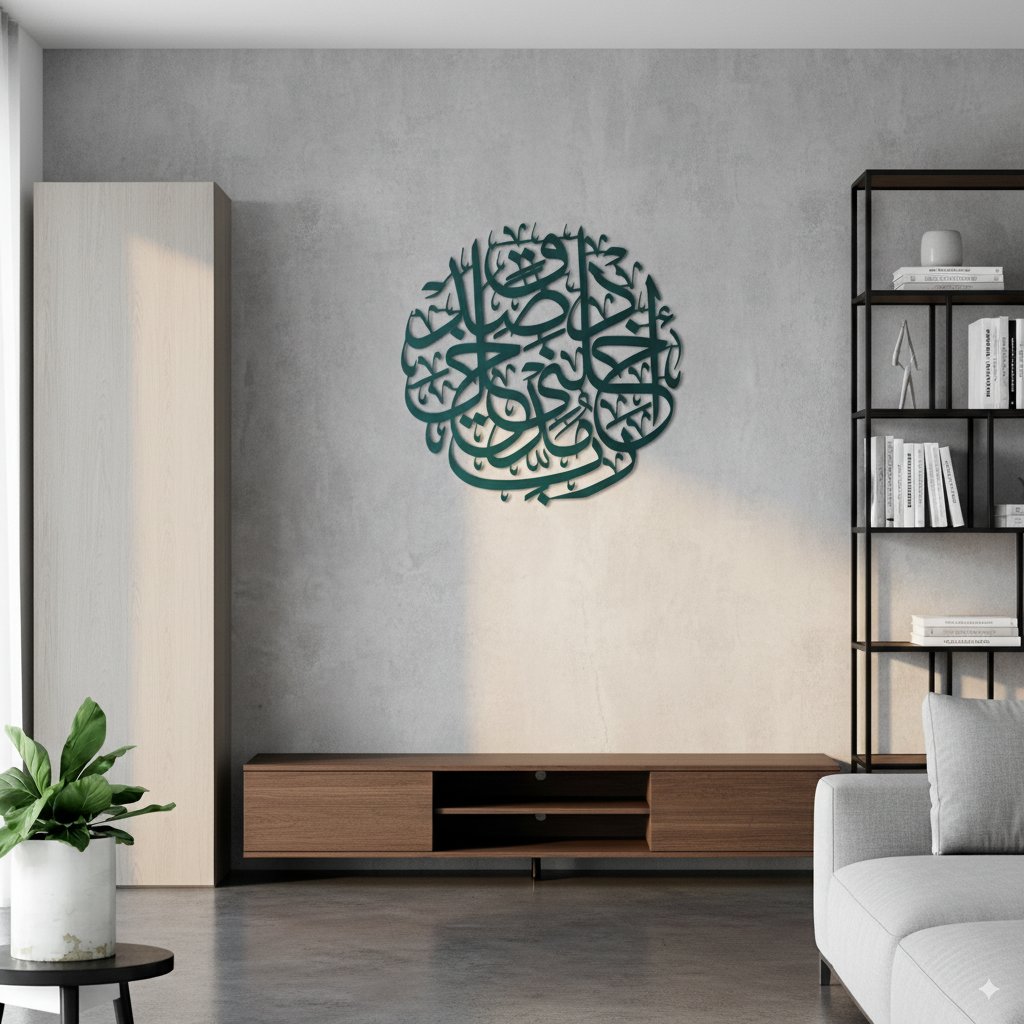
A thoughtfully designed home office fosters focus, creativity, and peace, and islamic wall art can play a transformative...
Bold geometric islamic wall art offers both aesthetic and functional benefits in interior design:
Material Choices: Canvas, metal, and tempered glass create distinct textures and reflect light differently.
Sizes & Proportions: Large panels can dominate a living area, while smaller geometric prints add subtle sophistication to entryways or offices.
Color Coordination: Earth tones, metallic accents, or monochromatic palettes ensure harmony with existing décor.
Visual Balance: Repetitive geometric motifs draw the eye and provide structural rhythm, creating a calming and anchored atmosphere.
By combining pattern and proportion, geometric art brings both visual stability and spiritual depth to a space.
Selecting complementary themes elevates both design and meaning:
Ayatul Kursi & Short Quran Verses: Work well within structured geometric panels to maintain serenity and focus.
99 Names of Allah: Integrate beautifully with repeated patterns or tessellations.
Abstract Calligraphy: Minimalist or modern strokes harmonize with geometric symmetry, avoiding visual clutter.
Room Function Alignment:
Living Rooms: Bold, eye-catching patterns for central walls.
Study/Office: Smaller, focused geometric pieces for concentration and calm.
Bedrooms: Subtle patterns paired with short verses for a peaceful environment.
Careful selection ensures both spiritual and aesthetic cohesion.
Proper styling maximizes impact and preserves the integrity of your islamic wall art:
Wall Placement: Hang at eye level, proportionate to furniture width.
Triptychs vs. Single Panels: Multi-panel geometric pieces anchor wide walls; singles create visual accents.
Lighting: Soft, diffused lighting enhances depth without causing heat damage.
Grouping Photos and Art: Combine personal photographs with geometric panels by maintaining consistent spacing and neutral color frames to avoid clash.
Room-Specific Guidance:
Living Room: Central geometric triptych above sofa.
Hallways: Smaller, repeating motifs for continuity.
Office: Minimalist geometry to enhance focus.
A considered approach ensures the artwork integrates seamlessly while emphasizing spiritual and aesthetic appeal.
Geometric islamic wall art demands specific maintenance depending on its material:
Canvas: Dust gently with a soft cloth; avoid damp walls to prevent warping or mold.
Metal: Clean with microfiber cloth; avoid abrasive cleaners to maintain surface finish.
Tempered Glass: Use non-abrasive glass solution; ensure backing protects the artwork from moisture.
Environmental Control: Maintain indoor humidity at 40–60% to prevent deterioration of canvas, wood frames, or paper backing.
Regular Checks: Inspect frames, mounts, and surfaces for signs of dust, moisture, or structural wear.
Proper maintenance keeps colors vibrant and geometric patterns crisp for years.
Choosing Wafanoor for islamic wall art guarantees both quality and convenience:
Craftsmanship: Every piece is designed and manufactured in-house, ensuring superior attention to detail.
Customization: Options for size, material, and framing allow perfect adaptation to your home.
Global Shipping: Secure packaging ensures delivery worldwide, including the USA, UK, EU, and the Middle East.
Expert Guidance: Placement, lighting, and care recommendations help you maximize the artwork’s impact and longevity.
Wafanoor combines artistry, spiritual resonance, and practical support for collectors and interior designers alike.
Geometric islamic wall art provides both visual and spiritual balance.
Canvas, metal, and glass pieces each have distinct maintenance needs.
Thoughtful placement and lighting enhance aesthetic and protective qualities.
Wafanoor offers in-house craftsmanship, customization, and worldwide shipping.
Regular inspection and careful cleaning ensure long-term vibrancy.
Q1: Can geometric patterns be used with other types of Islamic art?
A1: Yes, patterns complement calligraphy and short Quranic verses when spacing and color are harmonized.
Q2: How do I protect geometric metal panels from scratches?
A2: Use soft microfiber cloths and avoid abrasive cleaners; handle carefully during cleaning.
Q3: Are large geometric triptychs suitable for small rooms?
A3: Smaller panels or a single geometric piece is recommended for compact spaces to avoid visual overwhelm.
Q4: How often should I dust or inspect geometric wall art?
A4: Dust weekly and inspect every few months for moisture, warping, or loose mounts.
Share:
A thoughtfully designed home office fosters focus, creativity, and peace, and islamic wall art can play a transformative...
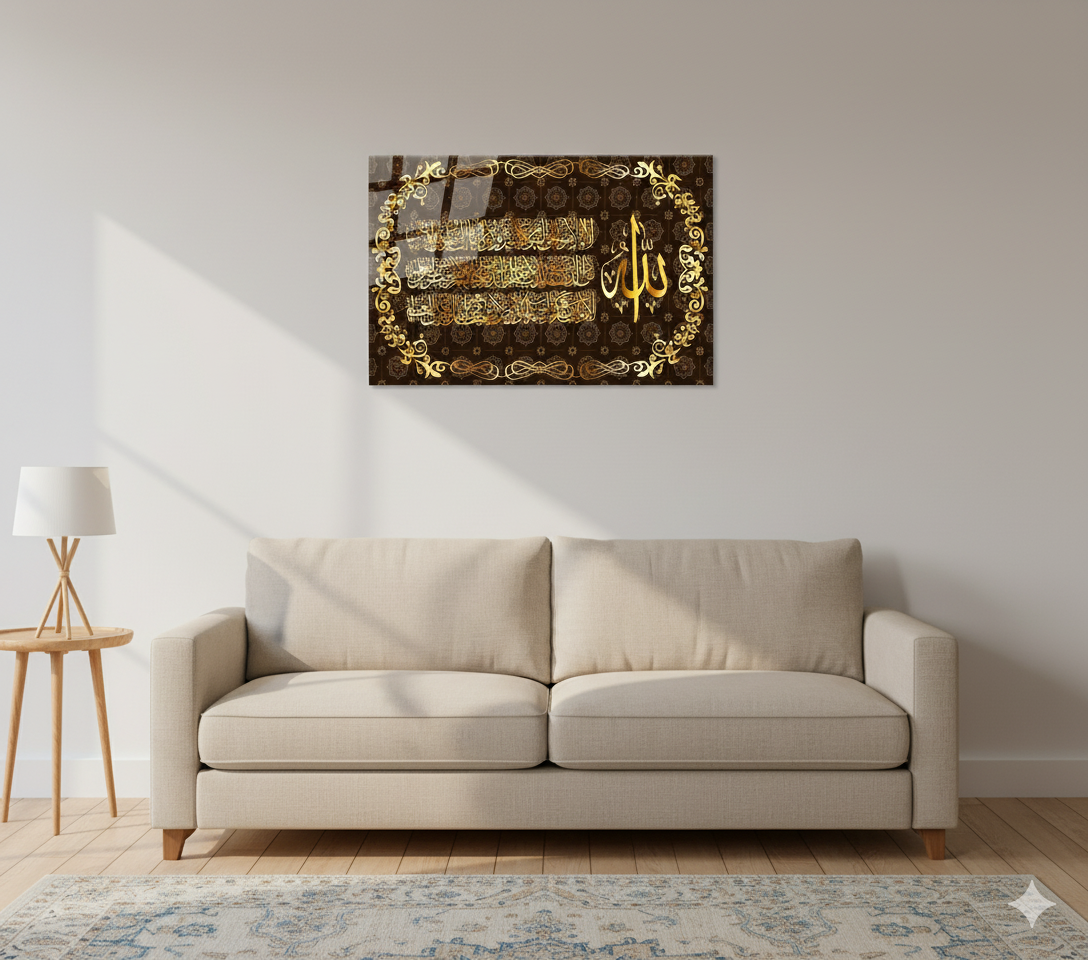
A thoughtfully curated collection of islamic wall art transforms a house into a home, weaving faith, artistry, and moder...

Selecting the right finish for islamic wall art can transform a room from ordinary to inspiring. At Wafanoor, founded in...
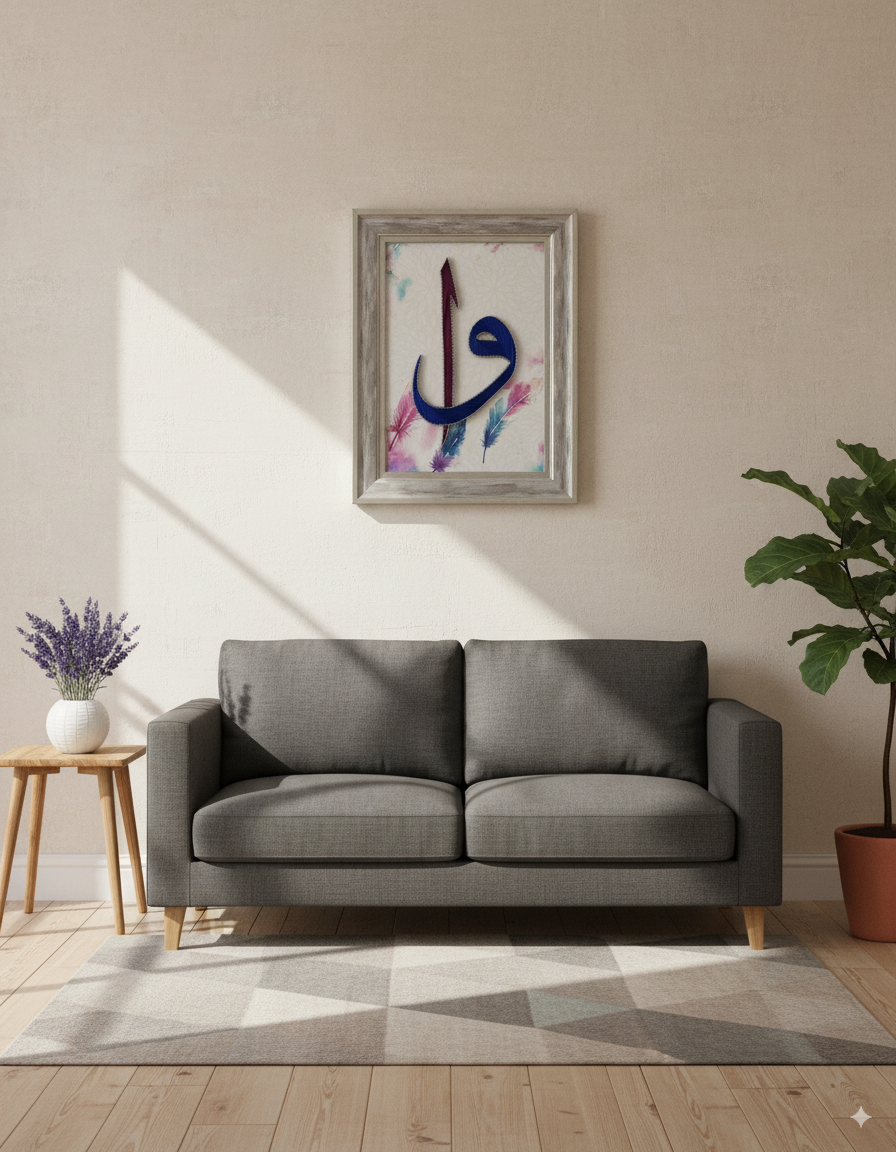
When it comes to enhancing your home décor, few elements have the power to transform a space like islamic wall art. Beyo...